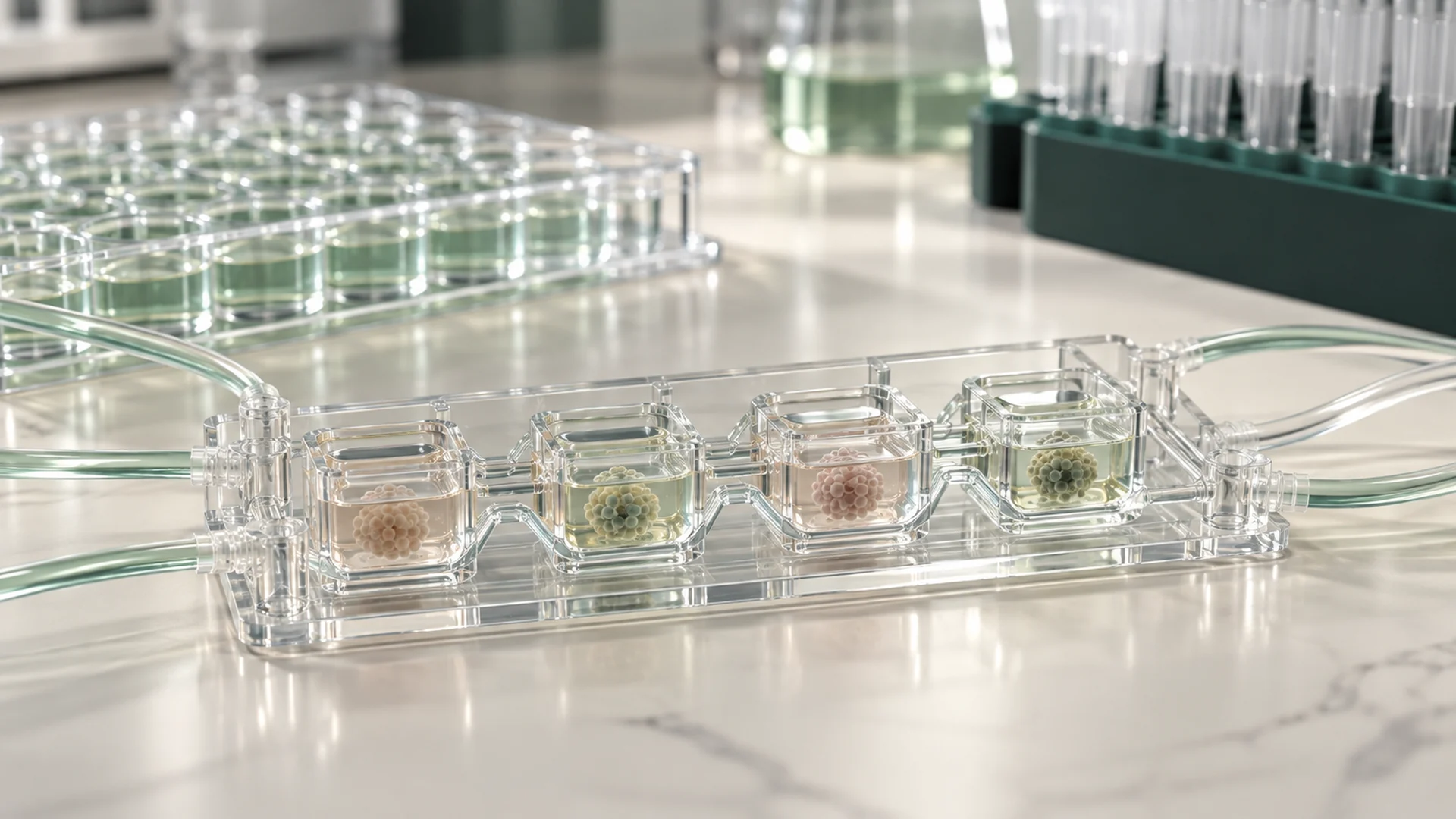
The human body relies on specialized biological barriers to separate different environments and maintain tissue homeostasis. From the skin that protects us from the outside world to the intestinal barrier that regulates nutrient absorption, these interfaces play essential roles in human health.
For researchers, accurately studying these barriers in the laboratory can be challenging. Traditional cell cultures often cannot reproduce the complex structure and interactions found in human tissues. In vitro barrier models offer a more controlled and human-relevant approach, allowing researchers to investigate barrier function, permeability, toxicity, and disease mechanisms without relying solely on animal models.
What Are In Vitro Barrier Models?
In vitro barrier models are laboratory systems designed to recreate the structure and function of biological barriers outside the human body.
These models typically use human cells cultured under controlled conditions to reproduce key characteristics of a specific tissue interface. Depending on the application, they may incorporate multiple cell types, three-dimensional structures, extracellular matrix components, or dynamic fluid flow.
By recreating important aspects of human physiology, barrier models allow researchers to study how substances move across tissues and how different conditions affect barrier integrity.
Why Are Barrier Models Important?
Barrier function can strongly influence how drugs, chemicals, and other substances interact with the human body. A compound may need to cross a particular barrier to reach its target, while in other situations, preventing penetration is essential for protecting tissues.
Traditional models can provide useful information, but they may not fully represent human tissue architecture or cellular interactions. Advanced in vitro models can provide more relevant experimental environments, helping researchers investigate biological responses earlier in the research process.
Different Types of Human Barrier Models
Blood-Brain Barrier
The blood-brain barrier (BBB) controls the movement of substances between the bloodstream and the brain. In vitro BBB models are used to study drug permeability, neurotoxicity, and neurological diseases.
Advanced platforms can combine endothelial cells with supporting cells such as astrocytes and pericytes to better reproduce the neurovascular environment.
Intestinal Barrier
The intestinal barrier regulates the movement of nutrients and compounds from the digestive system into the bloodstream while limiting the entry of harmful substances.
In vitro intestinal models can help researchers investigate drug absorption, intestinal toxicity, inflammation, and interactions between intestinal cells and external compounds.
More advanced systems can incorporate intestinal epithelial cells, mucus-producing cells, immune components, and microbiome-related interactions.
Skin Barrier
The skin is the body’s largest protective barrier. It prevents water loss and protects internal tissues from chemicals, microorganisms, and environmental factors.
In vitro skin models are widely used in cosmetic research, dermatology, and safety assessment. Reconstructed human skin models can provide valuable information about irritation, permeability, and the effects of topical ingredients.
Blood-Air Barrier
The lungs contain a highly specialized interface between the air in the alveoli and the bloodstream. The blood-air barrier must be extremely thin to enable efficient gas exchange while protecting the body from potentially harmful particles and substances.
Advanced lung models can recreate interactions between pulmonary epithelial cells and endothelial cells, providing opportunities for studying respiratory diseases, inhaled substances, and drug delivery.
Applications in Drug Development and Toxicology
Barrier models are particularly valuable when researchers need to understand how substances cross or interact with human tissues.
In drug development, they can help evaluate permeability and transport before compounds progress to later stages of testing. In toxicology, barrier models can reveal whether chemicals compromise tissue integrity or trigger cellular damage.
Because these systems can be developed using human cells, they also contribute to the development of more human-relevant approaches to preclinical research.
The Future of Barrier Models
The next generation of barrier models is moving beyond simple cell layers. Researchers are increasingly combining 3D cell culture, organoids, microfluidics, and organ-on-chip technologies to create more sophisticated tissue interfaces.
Dynamic systems can introduce fluid flow and mechanical forces, while multiple cell types can recreate interactions that are difficult to reproduce in conventional cultures.
As these technologies continue to develop, barrier models are expected to become increasingly important in drug discovery, toxicology, disease modeling, and the development of animal-free research strategies.
Advancing Human Barrier Research
Biological barriers are essential for maintaining human health, but their complexity makes them challenging to study using conventional laboratory methods. In vitro barrier models provide researchers with controlled systems for investigating tissue permeability, barrier integrity, disease mechanisms, and responses to potential therapies.
By combining human cells with advanced culture and microphysiological technologies, these models are helping researchers move toward more predictive and human-relevant biomedical research. As the technology advances, in vitro barrier models will continue to play an important role in understanding how substances interact with the human body.