2D vs. 3D Cell Culture: Choosing the Right Model for Biomedical Research
Explore the differences between two-dimensional and three-dimensional cell culture models, their research applications, and how each approach contributes to more reliable and human-relevant scientific studies.
Why Cell Culture Models Matter
Cell culture plays a vital role in biomedical research by providing scientists with controlled and reliable models for studying diseases, evaluating drug candidates, investigating cellular behavior, and understanding biological mechanisms.
Traditional two-dimensional cell culture has supported laboratory research for decades. However, advances in tissue engineering and in vitro model development have introduced three-dimensional culture systems that more closely resemble the organization and complexity of living tissues.
Selecting the most appropriate model depends on the scientific objective. Two-dimensional and three-dimensional systems each offer distinct advantages, and understanding their differences helps researchers design experiments that produce meaningful and relevant results.
Understanding 2D Cell Culture
In two-dimensional cell culture, cells grow as a single layer attached to a flat surface such as a culture dish, multiwell plate, or laboratory flask. This approach is widely used because it is straightforward, cost-effective, and relatively easy to reproduce across multiple experiments.
The direct accessibility of cells also makes 2D systems convenient for imaging, routine monitoring, biochemical analysis, and high-throughput screening. Researchers can easily observe cell morphology, measure proliferation, and test initial responses to compounds under controlled laboratory conditions.
Despite these advantages, cells growing on a flat surface may behave differently from cells located within the human body. Their shape, polarity, communication pathways, gene expression, and response to external signals can change because the surrounding environment does not fully represent natural tissue architecture.
Where 2D cell culture performs well: Two-dimensional systems remain highly valuable for routine laboratory studies, basic cellular analysis, assay development, early-stage screening, and experiments that require simple and reproducible conditions.
Why 3D Cell Culture Better Reflects Human Biology
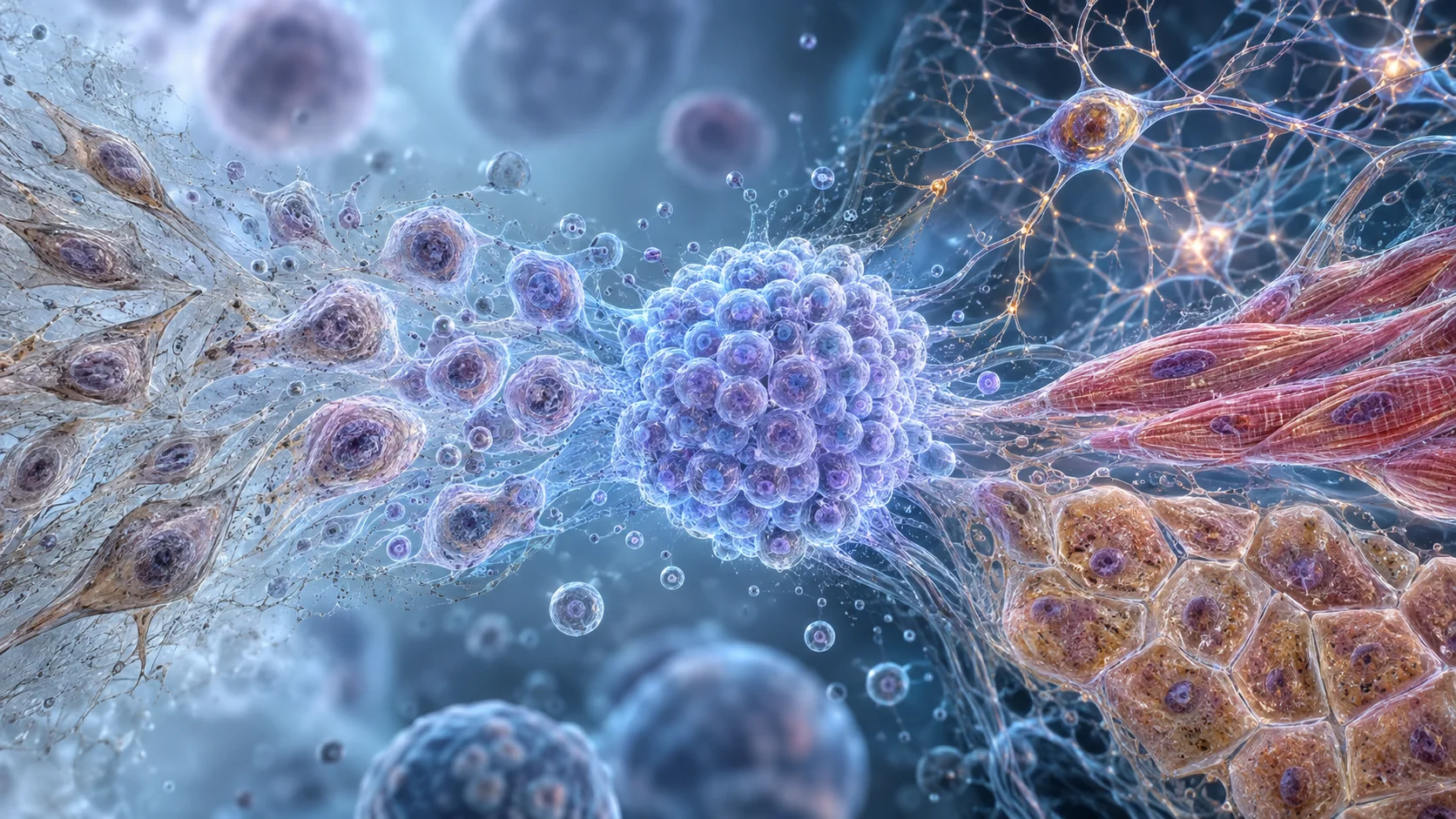
Unlike flat 2D systems, three-dimensional cell culture allows cells to grow, communicate, and organize in multiple directions. Depending on the model, cells may form spheroids, organoids, tissue-like structures, or engineered constructs supported by biological or synthetic matrices.
This three-dimensional environment supports more natural cell-to-cell and cell-to-extracellular matrix interactions. These interactions are essential because they influence cell differentiation, migration, proliferation, signaling, metabolism, and tissue-specific function.
As cells organize into structures that more closely resemble native tissues, researchers can observe biological behavior that may not appear in conventional monolayer culture. Gradients of oxygen, nutrients, signaling molecules, and metabolic waste can also develop within 3D models, creating conditions similar to those found in living tissues.
Natural Cell Organization
Cells can grow and interact in multiple directions rather than remaining restricted to a flat laboratory surface.
Realistic Cell Interactions
Three-dimensional models support more natural communication between cells and the surrounding extracellular matrix.
Human-Relevant Responses
Tissue-like organization can provide more predictive information about biological activity and treatment response.
2D and 3D Cell Culture Comparison
The choice between 2D and 3D cell culture should be based on the level of biological complexity required by the experiment. The following comparison highlights the main characteristics of each approach.
| Feature | 2D Cell Culture | 3D Cell Culture |
|---|---|---|
| Cell Organization | Cells grow as a monolayer on a flat surface | Cells grow and organize in three dimensions |
| Biological Relevance | Suitable for controlled and simplified cellular studies | More closely represents the structure of living tissues |
| Cell-to-Cell Interaction | Interactions are limited by the flat culture environment | Supports more natural and multidirectional cellular communication |
| Extracellular Matrix Interaction | Often limited or simplified | Can reproduce more realistic cell-matrix relationships |
| Experimental Setup | Simple, accessible, and cost-effective | May require specialized materials, equipment, or protocols |
| Imaging and Analysis | Cells are easy to observe and analyze | Analysis may require advanced imaging and data-processing methods |
| Common Applications | Routine assays, early screening, basic biology, and method development | Disease modeling, drug testing, tissue engineering, and regenerative medicine |
Applications of 3D Cell Culture
Because 3D models better reproduce the architecture and microenvironment of human tissues, they are increasingly used in research areas where cellular organization and complex biological interactions are important.
Cancer Research
Three-dimensional tumor models can reproduce important features of the tumor microenvironment, including differences in oxygen availability, nutrient distribution, cell density, and treatment penetration. This makes them valuable for studying tumor development and evaluating potential therapeutic approaches.
Drug Discovery and Safety Testing
Drug candidates may produce different effects in 3D models compared with traditional monolayer cultures. Tissue-like models can therefore help researchers assess compound activity, toxicity, cellular resistance, and biological response under more physiologically relevant conditions.
Tissue Engineering and Regenerative Medicine
Three-dimensional systems allow researchers to investigate how cells organize, differentiate, and contribute to tissue formation. These models are particularly useful for studying regeneration, biomaterial compatibility, and the development of functional tissue constructs.
Disease Modeling
Spheroids, organoids, and other advanced 3D systems can recreate selected characteristics of human diseases. Researchers can use these models to study disease progression, identify biological targets, and evaluate personalized treatment strategies.
Choosing the Right Cell Culture Model
Two-dimensional and three-dimensional culture models should not be viewed as direct replacements for one another. Instead, they serve different and often complementary purposes within biomedical research.
A 2D model may be the most practical option when researchers need rapid results, high experimental throughput, simple imaging, or standardized routine analysis. A 3D model may be more appropriate when tissue architecture, extracellular matrix interactions, cellular organization, or physiologically relevant responses are central to the research question.
The right model depends on the scientific question: 2D culture offers simplicity and reproducibility, while 3D culture provides greater biological complexity and tissue relevance. In many research workflows, using both approaches can create a more complete understanding of cellular behavior.
The Future of Human-Relevant In Vitro Research
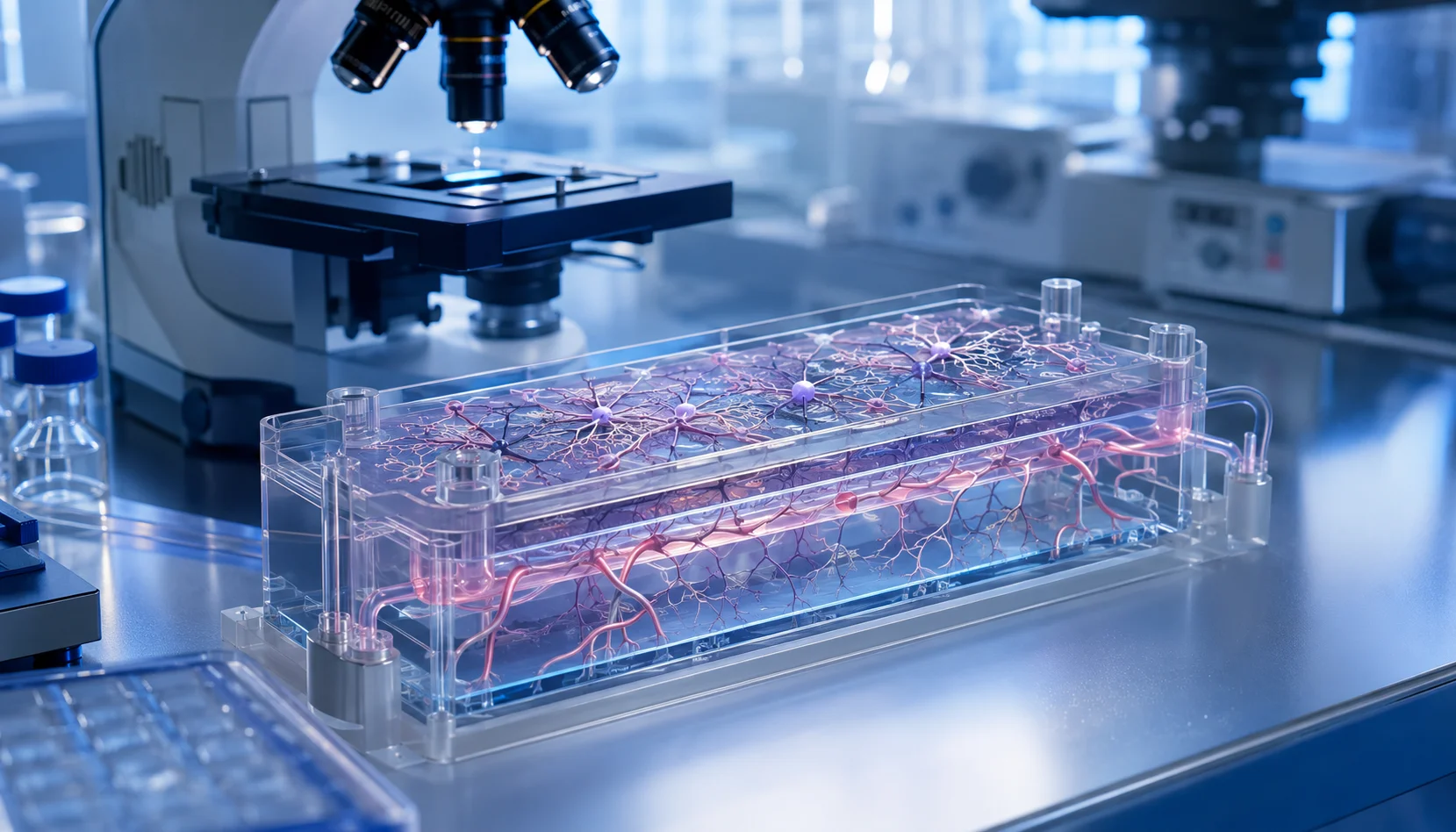
As biomedical research continues to move toward more predictive and human-relevant experimental systems, 3D cell culture is becoming an increasingly valuable tool. Advances in biomaterials, microfluidics, organoid technology, and Organ-on-a-Chip platforms are creating new opportunities to reproduce complex biological conditions in the laboratory.
Traditional 2D culture will continue to support efficient routine studies and early-stage experiments. At the same time, 3D models will help researchers investigate tissue-specific responses, improve translational relevance, and develop more advanced alternatives for disease modeling, drug discovery, and safety assessment.
Choosing the right cell culture model ultimately depends on the biological question researchers aim to answer, the complexity required, and the type of data needed to support reliable scientific conclusions.
Develop More Human-Relevant Cell Culture Models
Explore advanced in vitro solutions designed to support realistic cellular interactions, reliable experimental results, and the next generation of biomedical research.
Contact Us